Let me give you the Rolex waitlist explained straight — no sugarcoating. You walk into a Rolex authorized dealer, ask for a Submariner or a Daytona, and get told it’s not available. You put your name on a list. Months pass. Nothing happens. You call. You visit again. Still nothing. And somewhere in the back of your mind, you start wondering if the list is even real.
It is real. Sort of. But the Rolex waitlist works nothing like what most buyers imagine when they first register their interest. And once you have the Rolex waitlist explained the way it actually works — not the way dealers describe it — you’ll make completely different decisions about how to approach getting the watch you want.
This guide covers all of it. Why the Rolex waitlist exists, who actually gets watches and why, how long you’re realistically waiting by reference, what most buyers get wrong, and what your options are if the authorized dealer route just isn’t working.
The Rolex Waitlist Explained: What It Actually Is
Here’s the thing most buyers don’t know: there is no official Rolex waitlist. Rolex SA — the company in Geneva — does not operate a centralized customer queue. There are no deposit receipts, no ticket numbers, no system that tracks when you registered your interest and ensures you’re contacted in order.
What you’re actually signing up for when you put your name down at an authorized dealer is an informal internal list — maintained by that specific store, often managed by one salesperson, with no binding commitment to you whatsoever. Your name goes in a spreadsheet or a notebook. That’s it.
When an allocation arrives — two Daytonas for the year, say, or a single GMT-Master II Batman — the salesperson decides who gets contacted. And that decision has nothing to do with when you registered. It has everything to do with your relationship with that store. How much you’ve spent there. Whether the salesperson knows your name. Whether you’ve bought other pieces from them in the past year.
That’s the Rolex waitlist explained at its most honest: it’s not a queue. It’s a relationship-ranking system that looks like a queue from the outside. Once you understand that, everything else about the process makes sense — including why most people who “put their name down” never get the call.
Why Does the Rolex Waitlist Even Exist?
Some buyers assume the waitlist is a manufacturing problem — that Rolex simply can’t make enough watches. That’s not it. Rolex produces roughly one million watches per year. For most of the catalogue, supply and demand are reasonably balanced. The scarcity is concentrated in a specific set of references: the steel Daytona, the GMT-Master II Batman and Pepsi, the Submariner Date. And for those watches, the shortage is deliberate.
Rolex controls its production numbers carefully because scarcity protects something more valuable than short-term sales volume: brand desirability. A Rolex that anyone can walk in and buy on any given Tuesday is worth less — symbolically, psychologically, commercially — than a Rolex that trades at a premium on the secondary market because you can’t get one at retail. The Rolex waitlist isn’t a failure of supply chain management. It’s a brand strategy.
On top of that, Rolex controls what each authorized dealer receives. A medium-volume AD might get three steel Daytonas in a calendar year. They can’t order more. They receive what Rolex sends. Against a list of forty interested buyers, three watches means thirty-seven people are waiting for next year’s allocation — and most of them won’t get one then either.
And here’s the third piece: authorized dealers prioritize their own clients. Not Rolex buyers in general — their buyers specifically. Someone who has bought four pieces from a competitor AD across town is a stranger at your store. The Rolex waitlist system, as it actually operates, rewards loyalty to a specific location. Not to the brand. Not to Rolex. To that particular store and the relationship you’ve built with its staff.
Who Actually Gets Rolex Watches from Authorized Dealers?
This is the part most buyers find uncomfortable to hear. But having the Rolex waitlist explained properly means being honest about who wins allocation and why.
The clients who consistently receive sought-after references from authorized dealers share a few common traits. They’ve bought multiple pieces from that store — not just Rolexes, but other watches, accessories, gifts. They visit regularly, not just when they want something. The staff know them. There’s a personal relationship with a specific salesperson, built over months or years. And when an allocation arrives, the salesperson thinks of them first — not because they registered earliest, but because they’re the most valued client relationship in the book.
First-time buyers almost never receive a steel sport reference on their first visit. That’s not a bias — it’s the logical outcome of a system that allocates watches based on purchase history. If you have no history at a store, you’re starting at the back regardless of when you registered.
With the Rolex waitlist explained this way, you start to see why the most common buyer strategy — registering at multiple authorized dealers and waiting — rarely works. You’re cold on every list. You have no purchase history anywhere. And every store is prioritizing clients who’ve been spending there for years.
How Long Is the Rolex Waitlist by Reference in 2026?
The Rolex waitlist length varies enormously by reference. Here’s a realistic picture based on current market conditions:
| Reference | Realistic AD Waitlist (2026) | Secondary Market Premium |
|---|---|---|
| Rolex Daytona 126500LN (steel) | 5+ years — effectively closed to new clients | 60–120% above retail |
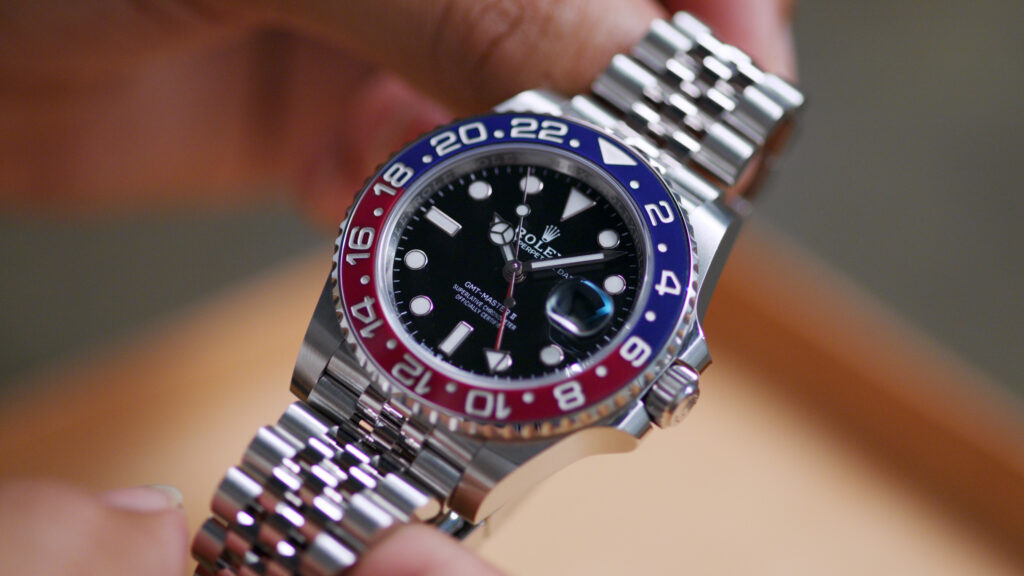
| GMT-Master II Batman 126710BLNR | 3–5 years | 30–60% above retail |
| GMT-Master II Pepsi 126710BLRO (steel) | 2–4 years | 20–50% above retail |
| GMT-Master II Root Beer 126711CHNR | 2–4 years | 25–55% above retail |
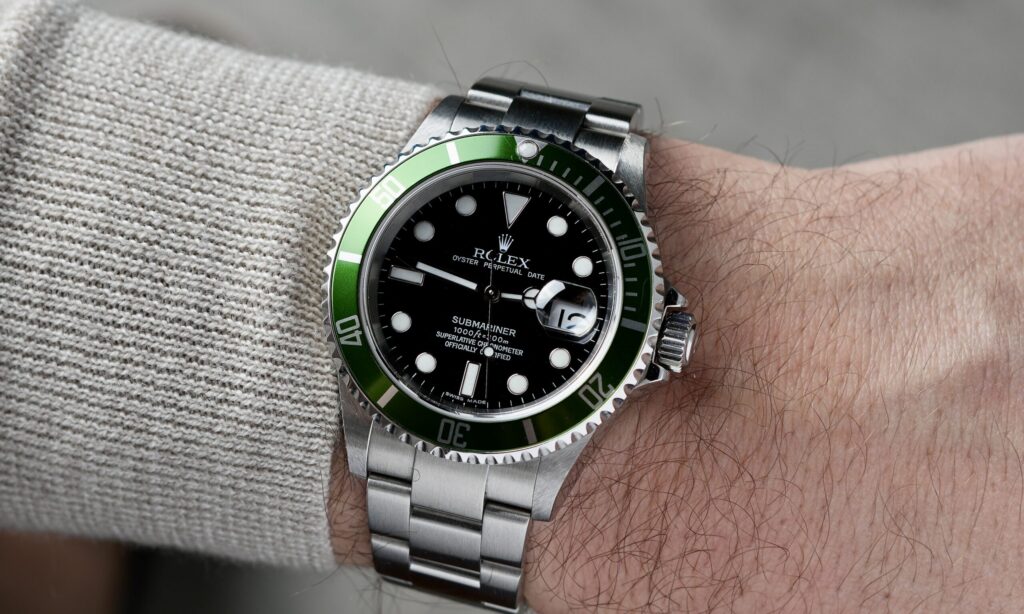
| Submariner Date 126610LN | 2–4 years | 10–35% above retail |
| Submariner No Date 124060 | 1–3 years | 5–20% above retail |
| Datejust 41 (common configurations) | 0–12 months | At or near retail |
A few things worth noting in this table. The Rolex waitlist for the steel Daytona isn’t just long — it’s functionally closed to new clients at most authorized dealers. The salespeople who can offer you one are working through established relationships that predate 2020. If you’re starting from scratch in 2026, you’re not going to wait your way to a steel Daytona through an AD. That’s not defeatism — it’s just the reality of the Rolex waitlist explained honestly.
The Datejust is the exception. More supply, less concentrated demand, and a shorter Rolex waitlist that can actually move within a reasonable timeframe for buyers willing to do the relationship work.
What Actually Happens When You Register on the Rolex Waitlist
Walk into an AD and tell them you want a Submariner. They’ll ask for your name and number, maybe your email. Some stores use a form. Most don’t. You leave feeling like you’ve accomplished something — you’re on the list.
Then nothing happens for months. Possibly years.
Here’s what’s actually going on behind the scenes. The salesperson has your name somewhere. When a Submariner allocation arrives, they go through their mental map of clients — not necessarily the spreadsheet, just who they know and like and trust. If you haven’t been in the store, haven’t bought anything, haven’t stayed in touch, you’ve probably faded from their active list. Many stores quietly purge inactive buyers from the Rolex waitlist without notifying anyone.
If they do call you and you don’t pick up fast — within 24 to 48 hours, sometimes less — the watch goes to the next person. No second chances. The Rolex waitlist doesn’t have a queue structure that holds your spot.
And if you decline an offer because the configuration isn’t exactly right? That goes on your record. ADs note buyers who turn down watches and often deprioritize them for future allocations. The Rolex waitlist punishes hesitation.
Common Rolex Waitlist Myths — Corrected
There’s a lot of bad information floating around about how the Rolex waitlist works. Here are the myths worth addressing directly.
Myth: It’s first come, first served
It isn’t. Registration date is almost irrelevant. The person who registered last month with three previous purchases at the store will get the call before the person who registered three years ago and never came back. The Rolex waitlist explained correctly is a relationship system, full stop.
Myth: Registering at more dealers gives you better odds
Only marginally, and only if you’re actually building relationships at multiple stores — which is expensive and time-consuming. Registering your name at ten dealers without buying anything from any of them doesn’t add up to much. Ten cold registrations are still ten cold registrations on ten separate Rolex waitlists where you have no purchase history.
Myth: If you wait long enough, you’ll eventually get the call
Not guaranteed at all. Most ADs quietly remove inactive buyers from their Rolex waitlist after six to twelve months of no contact. If you haven’t visited the store or made any purchases, there’s a real possibility you’re no longer on the list — and nobody told you.
Myth: The Rolex waitlist is getting shorter
For some references, secondary market premiums have come down from their 2021-2022 highs. But the authorized dealer Rolex waitlist for constrained references hasn’t meaningfully shortened. The production limits and allocation system haven’t changed. Buyers who assume the market is normalizing toward easy AD access are mostly finding that assumption wrong.
Myth: You can buy your way to the front with one big purchase
One big purchase helps, but it doesn’t instantly jump the Rolex waitlist. ADs are looking at sustained purchase history over time — not a single transaction that feels calculated. Making one expensive purchase and immediately asking for a Daytona is a pattern salespeople see constantly, and they’re not fooled by it.
The honest takeaway: Having the Rolex waitlist explained properly means accepting that for most buyers, the authorized dealer route for sport references is a multi-year commitment with uncertain odds. That doesn’t mean it’s not worth pursuing — it means you should pursue it with realistic expectations, and pursue alternatives in parallel.
How to Genuinely Improve Your Position on the Rolex Waitlist
If you’re committed to the authorized dealer route, here’s what actually moves the needle — based on how the Rolex waitlist actually works, not how buyers wish it worked.
Pick one dealer and actually show up
Choose one authorized dealer and visit consistently — not just to check on your Rolex waitlist status, but to browse, ask genuine questions about pieces you’re interested in, and spend time with the sales staff. Regular, genuine engagement is what builds the relationships that produce allocation. Occasional drop-ins to ask “any update on my Daytona?” do not.
Buy something
I know this feels counterintuitive. But buying a Datejust, a lady’s Rolex, an accessory, or even a watch from another brand the AD carries adds to your purchase history. It signals that you’re a real client, not a speculative name on a list. Many buyers who successfully received a sport reference from an AD credit two or three smaller purchases over twelve months as what actually changed their position on the Rolex waitlist.
Be specific about what you want
Tell the salesperson exactly what you’re looking for — the reference number, dial color, bracelet type, whether you want full set. The more specific you are, the more useful you are to them when an allocation arrives. A salesperson with a 126710BLNR Batman in hand is going to call the person who said “I want a 126710BLNR Batman on Jubilee bracelet, full set” — not the person who said “I’m interested in a GMT.”
Stay active and in contact
Drop in every six to eight weeks. Send a brief message. Let the salesperson know you’re still interested. Active engagement keeps you visible on the Rolex waitlist in a way that passive registration does not. The buyers who get allocation are almost always the ones who stayed in regular contact without being annoying about it.
Accept the first offer you get
When the call comes, say yes — even if the configuration isn’t perfect. Accepting your first offer from the Rolex waitlist signals to the AD that you’re a genuine buyer who doesn’t waste their time. It typically improves your standing for future allocations too. Declining your first offer, on the other hand, can move you significantly down the priority list.
Is the Rolex Waitlist Getting Better in 2026?
Slightly, in some ways. Secondary market prices for most sport references have pulled back from the extreme premiums of 2021 and early 2022 — which suggests that supply has improved relative to demand, at least on the open market. Some references that were nearly impossible to find at any price two years ago are now more available through secondary channels.
But the authorized dealer Rolex waitlist structure hasn’t changed. Rolex hasn’t increased production to a degree that meaningfully reduces waitlists for the constrained references. The allocation system still runs the same way. The purchase history requirements at ADs are still the primary determinant of who gets watches.
If you’re hoping the Rolex waitlist problem resolves itself in the next year or two, the data doesn’t support that hope for the Daytona, Batman GMT, or Submariner Date. Those references remain supply-constrained by design. The secondary market has moderated, but the AD queue for those pieces is still years-long for new clients.
Your Real Alternatives to the Rolex Waitlist
For buyers who want a specific reference in months rather than years, two routes actually work.
The secondary market directly
The secondary market is where these watches actually trade — above retail, but available now. You’re paying a premium, but you’re getting the watch. The risk is authenticity and navigating the market without expertise. For buyers confident in their authentication knowledge and comfortable with the transaction mechanics, the direct secondary market is the fastest path. Read our full breakdown on how to buy a Rolex without the waitlist for a complete guide to doing this safely.
A Rolex concierge service
A concierge sources the exact reference you want through a verified dealer network, authenticates it before presenting it to you, and manages the entire transaction. You tell us what you want. We find it, verify it, and present it with full photos and a complete condition report — nothing moves to payment until you’ve approved everything. Crown Watch Group works this way from Miami, with no buyer sourcing fee. Learn exactly how our process works.
For Miami clients, our Rolex concierge Miami service gives you the option to inspect the watch in person before committing to payment. That’s not something most secondary market transactions offer.
Frequently Asked Questions: The Rolex Waitlist Explained
Can I join multiple Rolex waitlists at once?
Yes, and many buyers do. But without purchase history at those stores, you’re cold on every list. Spreading thin across ten dealers rarely beats building one genuine relationship. The Rolex waitlist is a relationship system — you can’t shortcut relationships by multiplying cold registrations.
Does the waitlist work differently in other countries?
Yes, meaningfully. Rolex retail prices and demand vary by market. Some regions have shorter Rolex waitlists for specific references because local demand is lower relative to allocation. Cross-border grey market buying exists partly for this reason — though watches purchased outside their home market won’t carry a transferable Rolex warranty.
What if I’ve been waiting over a year with no contact?
There’s a real chance you’ve been quietly removed from the Rolex waitlist. Go back to the store in person, ask about your status, and re-establish the relationship. Don’t assume your registration from a year ago is still active. In most cases it isn’t, unless you’ve been keeping in regular contact.
Is it worth staying on the AD waitlist if I’m buying on the secondary market?
Absolutely. Buy what you want now on the secondary market and keep building your AD relationship simultaneously. The Rolex waitlist path gets more viable as your purchase history grows. Many serious collectors run both tracks in parallel — they’re not mutually exclusive, and the AD relationship pays dividends for future purchases even if it takes years to produce the specific piece you wanted first.
How do I know if I’ve been removed from the waitlist without being told?
You probably won’t be told. The clearest sign is when a salesperson who previously acknowledged your interest goes quiet. If you haven’t had contact with the store in six months or more, visit in person to check your status. Assume you need to re-register and rebuild the relationship rather than assuming your original position is still holding.
Can I pay a deposit to secure my place on the Rolex waitlist?
No legitimate authorized Rolex dealer charges a deposit to join the waitlist. Rolex SA prohibits this practice. If an AD is asking for a deposit or a premium to secure your place on the Rolex waitlist, that’s a red flag — they’re either operating outside Rolex guidelines or outright scamming you. Walk away.
Crown Watch Group is Miami’s Rolex sourcing and concierge service. If the authorized dealer waitlist isn’t working for you, we source the exact reference you want through a verified global dealer network — authenticated before payment, no buyer sourcing fee. Request a watch today.
Ready to Source Your Rolex?
Let Us Find the Watch You've Been Looking For
No waitlists. No guesswork. Authenticated Rolex watches sourced directly for you.
Request a Watch