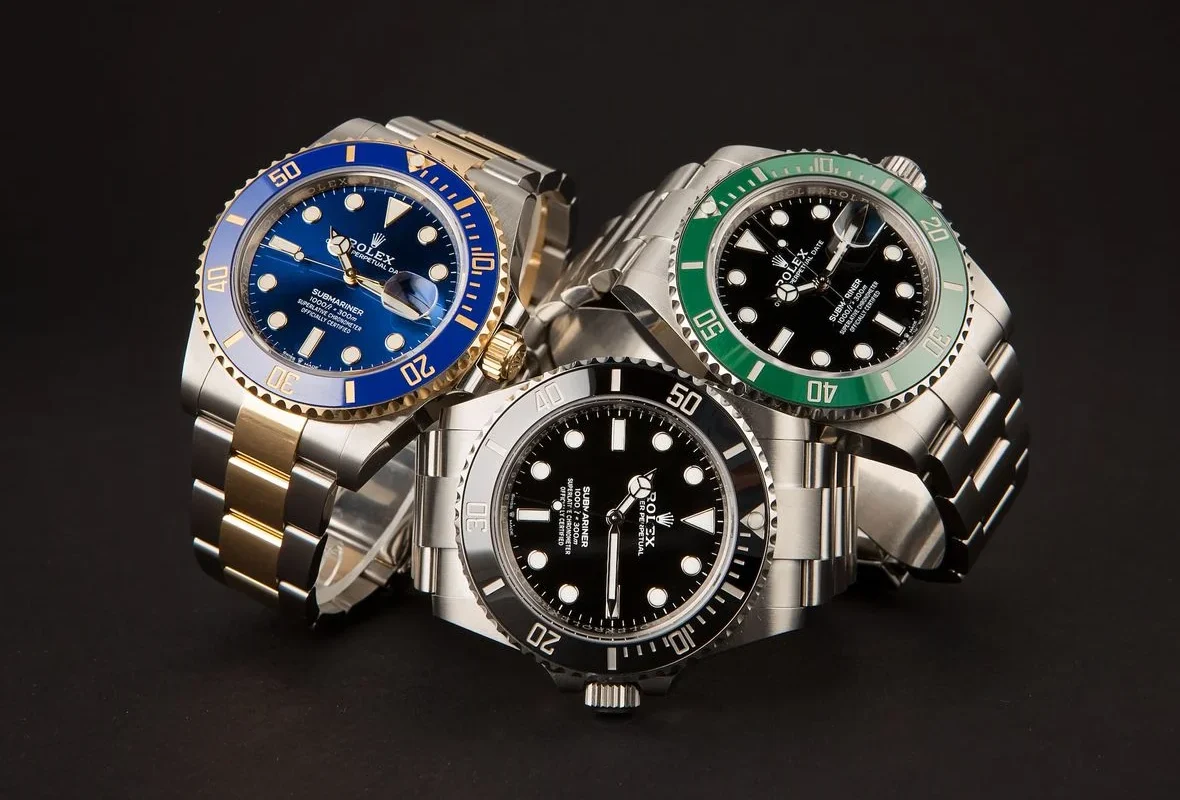
Why is Rolex so expensive? It’s the first question most people ask when they look up the price of a Submariner and see $10,800 — for a steel watch with no complications beyond the date. The vague answers you usually hear (“they’re well-made” or “it’s the brand”) don’t actually explain anything. The real answer is more specific and more interesting than either of those. It involves six distinct factors — some engineering, some economics, and one deliberate strategic choice that Rolex has been executing for thirty years. While you’re here, browse our pre-owned inventory to see what these watches actually cost on the secondary market today.
Why Is Rolex So Expensive? The 6 Real Reasons
1. Rolex Makes Almost Everything Itself
Vertical integration is the starting point for why is Rolex so expensive. Most watch brands — even expensive ones — source significant components externally. Movements from ETA or Sellita. Cases from specialist case manufacturers. Dials from dedicated dial suppliers. Rolex does almost none of this.
Rolex designs and manufactures its movements at its Bienne facility. Cases and bracelets come from Plan-les-Ouates. Dials come from Cadran SA — a wholly owned Rolex subsidiary. Rolex produces its own proprietary steel alloy (904L Oystersteel), its own rose gold formulation (Everose), and its own hairspring material (Parachrom). It runs its own COSC-certified chronometer testing laboratory. It even produces its own cutting tools.
This level of vertical integration is extraordinarily rare in watchmaking. Only a handful of watch companies globally manufacture at this level of self-sufficiency. Producing everything in-house means quality control at every stage — but it also means maintaining enormously expensive manufacturing infrastructure. Those costs flow directly into the price of every watch that leaves the factory.
When you buy a Rolex, you’re partially funding the factories, labs, and tooling infrastructure that produced it — not just the watch itself. That’s a meaningful part of why is Rolex so expensive at a structural level.
2. The Steel Is Genuinely Different
The industry standard for watch cases is 316L stainless steel. It’s a fine material — hard, corrosion-resistant, reasonably machinable. Nearly every watch brand uses it, including Swiss brands charging $5,000–$15,000 for their watches.
Rolex uses 904L stainless steel — an alloy originally developed for aerospace and chemical processing applications where corrosion resistance in extreme conditions was a non-negotiable requirement. 904L is significantly harder than 316L, more corrosion-resistant, and takes a noticeably higher polish. It also costs considerably more to machine. The cutting tools required to shape 904L wear faster than those used on 316L. The machining process takes longer per case. The cost per finished case is meaningfully higher as a result.
Rolex made this material choice deliberately and has maintained it for decades — not because it was required to, but because the result is better. A harder steel means greater scratch resistance over years of daily wear. A higher achievable polish means the case surfaces look more precisely finished. Both differences are real and visible if you compare a Rolex case to a comparable reference from a brand using 316L. You pay for both.
3. The Manufacturing Tolerances Are Extreme
Every Rolex movement must pass COSC chronometer certification — accuracy within -4/+6 seconds per day. Rolex then applies its own internal standard on top: -2/+2 seconds per day. Stricter than the independent certification. This matters because hitting -2/+2 reliably requires manufacturing and regulating each movement to tighter tolerances than -4/+6 requires. More time, more skill, more cost per unit.
Water resistance testing is similarly rigorous. A Submariner must maintain water resistance to 300 metres — and this isn’t a specification Rolex tests on sample units. Every individual Submariner is pressure-tested to 10 bar before it ships. A Sea-Dweller to 1,220 metres. Per unit. This is not how most watch manufacturing works. Batch sampling is the industry norm. Individual certification for every unit adds labour cost that doesn’t exist in standard production.
Bracelet quality is another area where Rolex’s tolerances show. The Oyster and Jubilee bracelets are finished with the same brushed-polished alternation pattern as the case — and the transitions are expected to be razor-sharp. Maintaining that precision across thousands of individual links, consistently, requires manufacturing standards that most brands don’t attempt.
Understanding why Rolex is expensive also helps you evaluate pre-owned value. Browse authenticated inventory — real secondary market pricing — or submit a sourcing request and we’ll give you honest current pricing on any reference.
4. Swiss Manufacturing Costs Are Among the Highest in the World
Rolex employs approximately 9,000 people in Switzerland, spread across facilities in Geneva, Bienne, and Plan-les-Ouates. Swiss labour costs rank among the highest anywhere in the world — comparable to Scandinavian countries and meaningfully above most of Western Europe. Everything from assembly technicians to watchmakers to quality control staff comes at Swiss wage rates.
The Swiss franc’s persistent strength relative to the US dollar adds currency pressure on top. When the franc strengthens — which it has done repeatedly over the past decade — the USD equivalent of Rolex’s CHF-denominated production costs rises without any change in the underlying manufacturing. US retail prices have to follow. Part of why is Rolex so expensive in dollar terms is simply the exchange rate, compounded year over year.
Switzerland also has high energy costs, high commercial real estate costs, and strict environmental and labour regulations that add compliance overhead. None of this is a criticism — Swiss manufacturing standards are part of what “Swiss Made” means and part of what buyers are paying for. But it’s a structural cost reality: watches manufactured in Switzerland at Swiss quality standards cost more to produce than watches manufactured elsewhere.
5. Deliberate Scarcity — The Strategic Choice
This is the reason why is Rolex so expensive that most buyers find counterintuitive, and it’s worth explaining carefully because it’s also the most important factor for secondary market buyers.
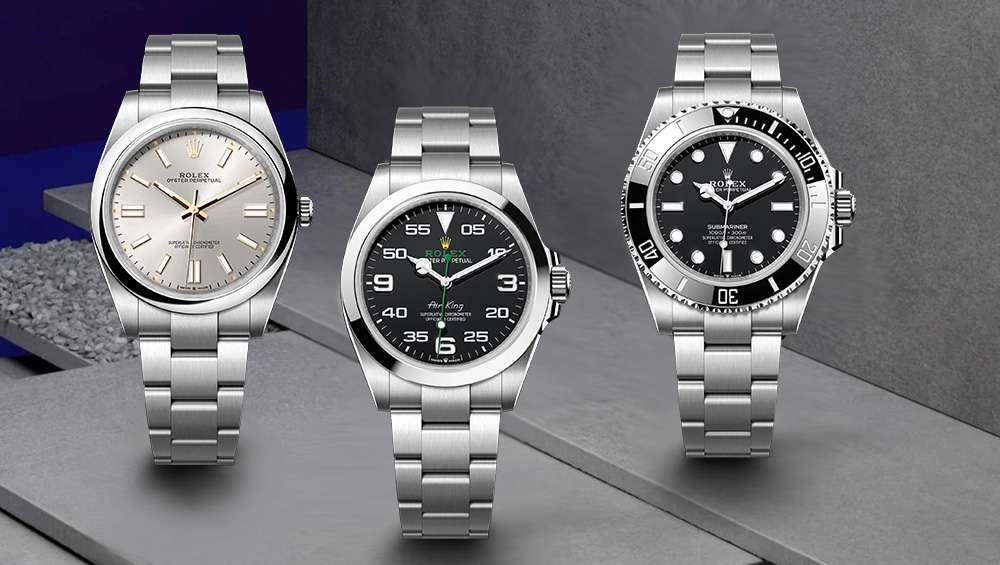
Rolex produces approximately one million watches per year. That’s more than any comparable luxury watch brand. For most of the catalogue — Datejust, Explorer, Oyster Perpetual, Air-King — supply is broadly balanced with demand. You can buy these at an authorised dealer without a meaningful waitlist. Secondary market prices are near retail.
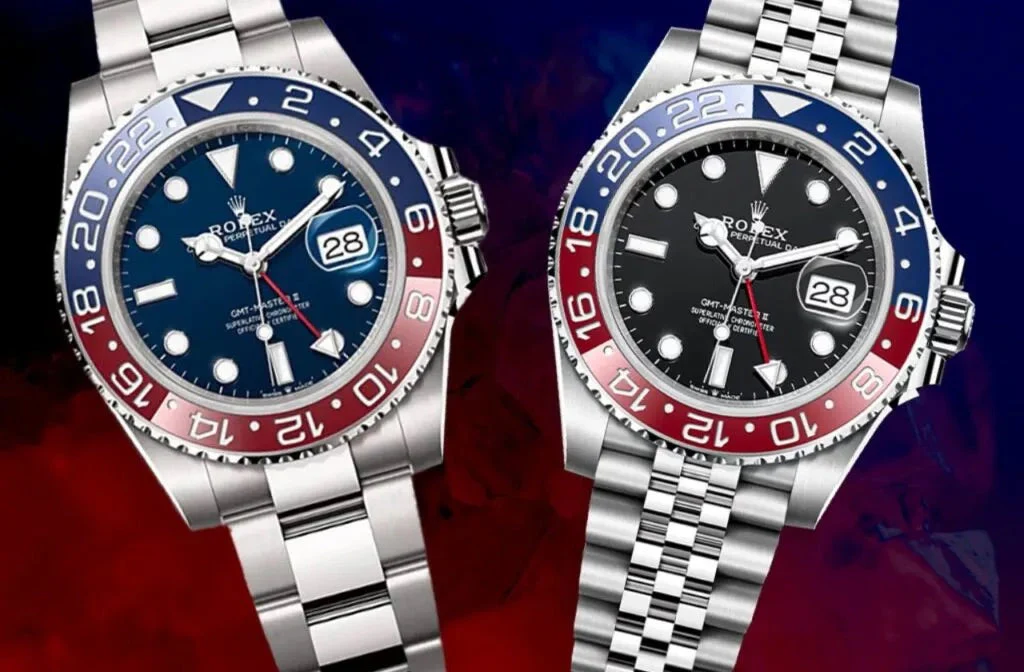
For specific references — the steel Daytona, the GMT-Master II Batman, the GMT-Master II Pepsi, the Submariner Kermit — Rolex produces well below demand. Waitlists at authorised dealers run three to five-plus years. The company could produce more of these references. The manufacturing capacity exists. The choice not to is deliberate policy.
The mechanism this creates: production constraint → waitlists → desirability → secondary market premiums → retail price appears below market value → both the waitlist and the premium feel justified → demand increases further. It’s a self-reinforcing cycle, and Rolex has been running it for over thirty years with complete consistency. It still works because the underlying product quality is genuine — a scarcity strategy only sustains long-term if the product earns it.
6. Over 120 Years of Compounded Brand Equity
Rolex was founded in 1905. In 1926 it produced the world’s first waterproof wristwatch case — the Oyster. In 1931 it invented the self-winding Perpetual rotor mechanism still used in automatic watches today. In 1945 it introduced the first wristwatch to display the date automatically. In 1953 a Rolex Oyster Perpetual was worn to the summit of Mount Everest by Edmund Hillary and Tenzing Norgay. These are genuine, documented historical achievements — not manufactured associations.
Brand equity compounded over 120 years has real economic value that doesn’t appear on any balance sheet but absolutely appears in the price. When you buy a Rolex, you’re paying in part for certainty: this brand will exist in fifty years, service parts will be available, qualified watchmakers will know how to service it, and the watch will be recognisable and valued by buyers worldwide if you ever need to sell it. No other watch brand can make that combination of claims with the same confidence.
That certainty has a premium attached — and whether buyers consciously recognise it or not, it’s part of every transaction involving a Rolex at any price level.
Why Is Rolex So Expensive Compared to Other Luxury Watch Brands?
Context matters when thinking about why is Rolex so expensive. The price means different things relative to different comparison points.
| Brand / Category | Price range | What you get vs. Rolex |
|---|---|---|
| TAG Heuer, Breitling (entry luxury) | $3,000–$8,000 | 316L steel, ETA or in-house movements at lower precision, less secondary market support |
| Rolex (sport references) | $9,000–$17,000 | 904L steel, fully in-house movements at COSC+, strong secondary market, 120 years brand equity |
| Omega, IWC (mid luxury) | $5,000–$15,000 | Good in-house movements, lower secondary market premiums, less scarcity-driven demand |
| Patek Philippe, AP (haute horlogerie) | $20,000–$200,000+ | More complex complications, hand-finishing Rolex doesn’t attempt — different category entirely |
Against TAG Heuer and Breitling, Rolex’s premium is clearly justified by measurable differences — better steel, tighter accuracy, stronger secondary market, more durable construction. Against Omega and IWC, the comparison is closer — both make excellent watches — but Rolex’s secondary market premiums and brand longevity represent real additional value. Against Patek and AP, Rolex is the more accessible reference point; those brands offer complications and hand-finishing that Rolex doesn’t attempt, at prices that reflect the difference.
Why Is Rolex So Expensive: Reference-by-Reference Breakdown
Not all Rolex watches are equally expensive, and not all the pricing is for the same reasons. Understanding which references cost more and why is useful for buyers deciding where in the catalogue to focus.
Submariner ($9,100–$10,800): The entry-level sport Rolex. Price driven primarily by manufacturing quality, 904L steel, COSC+ movement. No meaningful scarcity premium at retail — available from ADs without dramatic waitlists. Secondary market adds 25–50%.
GMT-Master II ($10,700–$11,300): Similar base manufacturing cost to the Submariner plus the additional GMT complication. Scarcity premium is significant on the Batman, Pepsi, and Sprite — these references sell at 60–150% above retail on the secondary market because Rolex constrains supply well below demand.
Daytona ($16,550): Most expensive steel sport Rolex. Price reflects the Caliber 4131 chronograph — a far more complex movement than a three-hand plus date caliber. Additional components, more complex assembly, more extensive testing. Plus the strongest scarcity-driven premium in the catalogue: AD waitlists of five-plus years and secondary market premiums of 70–130% above retail.
Day-Date ($38,550–$100,000+): Precious metal construction (18ct gold minimum, platinum available) plus the Caliber 3255 (Rolex’s most advanced movement) plus the President bracelet. The bulk of the price is material cost — 150+ grams of 18ct gold in the case, bracelet, and clasp is worth a lot of money by itself.
Why Is Rolex So Expensive: Common Myths That Miss the Point
People who ask why is Rolex so expensive often get answers that sound convincing but don’t hold up under scrutiny. Here are the three most common myths — and why they’re misleading.
Myth 1: “You’re just paying for the name.” This is the dismissal that sounds sophisticated but isn’t. If the price were purely a brand premium on top of a generic watch, the engineering differences between a Rolex and a similarly priced competitor wouldn’t exist. They do. The 904L steel, the per-unit water resistance certification, the in-house movement to tighter-than-COSC accuracy — these are real manufacturing decisions that cost real money. “Paying for the name” implies there’s no substance behind the name. There is.
Myth 2: “A $500 Seiko keeps the same time.” True in a narrow sense — modern quartz movements are extremely accurate. But accuracy is one specification among dozens, and it’s not why is Rolex so expensive. Rolex pricing reflects 904L steel vs plastic-coated steel, Swiss manufacturing tolerances vs mass production, a watch serviced by a global network with genuine parts availability vs something that gets replaced when it breaks. These aren’t the same product with different badges.
Myth 3: “You’re just buying brand equity.” Brand equity is real and part of the value — but it’s not the whole explanation, and framing it as “just” brand equity misses what brand equity actually means in practical terms. A Rolex is guaranteed to have parts and service availability in fifty years. It’s guaranteed to have a knowledgeable global secondary market. It’s guaranteed to be immediately recognisable to buyers on every continent. That’s not decoration — it’s liquidity and certainty, and those things have genuine financial value beyond aesthetics.
The honest answer to why is Rolex so expensive isn’t any single factor. It’s the combination of all six reasons operating together — and the fact that none of them are myths.
Why Is Rolex So Expensive to Own Long-Term: The Servicing Reality
The purchase price isn’t the end of the cost conversation. Why is Rolex so expensive extends into the cost of ownership over decades, which buyers don’t always factor in upfront.
Rolex recommends service intervals of approximately 10 years for most references. A Submariner service at an authorised Rolex service centre runs $800–$1,200. A Daytona chronograph service runs $1,000–$1,500, due to the more complex movement. These are not optional — a watch that hasn’t been serviced for 15–20 years will have a degraded mainspring, worn gaskets, and reduced accuracy. Servicing maintains both function and value.
Specialist insurance is another ongoing cost. A watch worth $15,000–$30,000 needs to be covered specifically — standard home contents insurance typically excludes single items of this value or applies a per-item cap that doesn’t cover it. Specialist watch insurance runs approximately 1–2% of insured value annually: $150–$300 per year on a $15,000 Submariner.
None of these costs eliminate the value case for Rolex. But they’re part of the full picture when you’re working out whether the answer to why is Rolex so expensive is justified for your specific situation. A watch that costs $12,000 retail but retains $11,000–$14,000 in secondary market value over a decade — while costing $1,000–$1,500 in servicing and $1,500–$3,000 in insurance — is still a remarkably favourable asset compared to most $12,000 purchases that depreciate to zero.
Is Rolex Worth the Price? An Honest Answer
When people ask why is Rolex so expensive, they’re often really asking whether it’s worth it — and that question deserves a direct answer rather than a hedge.
For sport references where you want a daily-wear tool watch that holds its value, ages well, and can be serviced anywhere on earth: yes, it’s worth the price. The engineering is genuine, the secondary market support is real, and the watch will be worth buying in twenty years in a way that most $5,000–$8,000 watches won’t be. You’re not just buying a watch — you’re buying a watch that retains value, which no other brand at this price tier does as consistently.
For investment-specific buyers: the steel sport references (Daytona, GMT Batman/Pepsi, Submariner Kermit) have delivered 50–200% appreciation over their production cycles. That’s a real investment case, not marketing. But it applies to specific references with documented scarcity — not to the Datejust or standard Oyster Perpetual.
For pure horological value — complexity of movement, depth of hand-finishing, the craft element — Rolex at $10,000–$16,000 is not competing with independent watchmakers or haute horlogerie houses. It’s a precision instrument, not an art object. If you want the craftsmanship pinnacle of watchmaking, Patek Philippe and independent makers like F.P. Journe or Philippe Dufour are the relevant comparison. Rolex is doing something different and doing it extremely well.
Frequently Asked Questions: Why Is Rolex So Expensive
Why is Rolex so expensive compared to other Swiss watches?
Rolex’s complete vertical integration — manufacturing movements, cases, bracelets, dials, and proprietary materials all in-house — creates a cost base that most brands avoid by outsourcing. Combined with 904L Oystersteel (more expensive than the 316L most brands use), Swiss labour costs, per-unit water resistance testing, and COSC+ accuracy standards, the production cost per watch is genuinely higher than most competitors. The deliberate scarcity strategy on key sport references then adds a secondary market premium on top of that manufacturing reality.
Is Rolex actually better quality than cheaper watches?
In measurable, specific ways — yes. The 904L steel is demonstrably harder and more corrosion-resistant than 316L. The ±2 seconds per day internal accuracy standard exceeds the industry COSC certification. Water resistance is tested per unit rather than by batch sample. The bracelet finishing tolerances are tighter than most competitors. These differences are documentable, not subjective.
Why is the Rolex Daytona more expensive than the Submariner?
The Daytona’s Caliber 4131 chronograph movement is significantly more complex than the Submariner’s Caliber 3235. A chronograph adds approximately 100–150 additional components — the column wheel, vertical clutch, chronograph bridge, two additional pushers with their own sealing systems. More components, more complex assembly, more testing. The $5,750 retail gap between the Daytona and Submariner largely reflects this mechanical complexity. The secondary market premium reflects both complexity and Rolex’s even tighter supply constraint on the Daytona specifically.
Will Rolex prices keep going up?
They have for thirty-plus years without a break. Annual retail price increases of 4–8% have been the pattern since at least the mid-1990s. Swiss manufacturing costs rise, the franc fluctuates, and Rolex uses retail pricing in part to manage secondary market premium perception. Nothing suggests this pattern is likely to change. If you’re asking why is Rolex so expensive and getting more expensive each year — the answer is deliberate: Rolex adjusts pricing upward as a policy, not only as a cost-response.
Why does Rolex hold its value better than other watch brands?
Three compounding reasons: genuine manufacturing quality that justifies the retail price, deliberate scarcity on key references that creates secondary market premiums, and 120 years of brand equity that creates a deep global buyer pool. Any one of these factors contributes to value retention. All three together is why Rolex’s secondary market performance is in a different category from most luxury watch brands.
The Bottom Line
Why is Rolex so expensive? Because of six specific, documentable factors — complete vertical integration of manufacturing, 904L Oystersteel rather than standard 316L, extreme per-unit quality testing, high-cost Swiss production, deliberate supply constraints on key references, and 120 years of compounded brand equity. None of these factors are marketing. All of them are real.
Whether that makes it worth buying depends on what you’re buying and why. If the question behind “why is Rolex so expensive” is really “should I buy one” — for sport references that hold value and are backed by genuine engineering substance, the case is strong. Browse what we have available — or reach out directly if you want honest current secondary market pricing on any specific reference.
Ready to Source Your Rolex?
Let Us Find the Watch You've Been Looking For
No waitlists. No guesswork. Authenticated Rolex watches sourced directly for you.
Request a Watch